ChatGPT Ads for Events: What Marketers Should Expect and Do Next
Earlier this year, ChatGPT launched ads in the U.S. Following that initial testing phase, OpenAI announced plans to expand advertising into Australia, New Zealand and Canada. As of a few days ago, the UK, Japan, Korea, Brazil and Mexico have been added to that list.
While this may feel like just another headline in the ongoing AI boom, it points to something bigger. This new ad platform could signal a shift in how people are discovering brands, services, products and, of course, events.
So, let’s take a look at what these ads look like and what this might mean for event marketers.
What do ChatGPT Ads look like?
The new ads are visible to ChatGPT’s Free and Go users, with higher-paying members excluded from the initial pilots. They sit separately from the main response, clearly labelled as “sponsored content,” and appear at the bottom of the chat. In terms of format, they’re fairly simple, consisting of a headline, a short description, and a square image.
In other words, ChatGPT has become another place where people will see ads. The difference is that these ads are appearing alongside conversations, rather than in feeds or traditional search results.
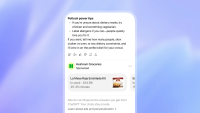
How ChatGPT Decides When to Show Ads
Unlike traditional social platforms that rely heavily on audience targeting, ChatGPT ads are triggered by what someone is actually asking in the moment. Ads don’t appear because a user fits a demographic; they appear because of intent.
If someone asks “best marketing conferences in Europe this year” or “team offsite ideas for CPD,” that creates a natural opportunity for relevant events to show up. This is where things start to change. Visibility is no longer just about reaching the right audience; it’s about showing up when someone is actively looking for something like your event.
Why This Matters For Events
Event audiences are already using ChatGPT to find things to do in specific cities, research conferences and retreats, compare formats and ticket types, and plan team off-sites or professional development. What’s changing is how that discovery happens.
ChatGPT is becoming a place where people explore options before they search for something specific. For event marketers, especially those working on campaigns where timing matters, this is important. If your event isn’t part of that early exploration, you risk missing the moment where decisions start to form.
Another key point is that ads here aren’t just about budget. Context matters. The more clearly your event is positioned, and the more information that exists about it online, the easier it becomes for ChatGPT to match it to the right query. That applies to both paid placements and organic responses.
Put simply, event marketers can’t rely on social, email, or last-minute promotion alone. Discovery is becoming more conversational. People are asking questions instead of typing keywords, and the events that show up will be the ones already answering those questions.
A New Entry Point in the Event Discovery Funnel
For years, event discovery has followed a fairly predictable path across social, search, word of mouth, and marketplaces. ChatGPT introduces something slightly different by creating a moment before all of that.
Instead of searching for a specific event, people are asking broader questions about what is worth attending, where they should go, or how to spend their time. This is especially relevant for higher consideration events, particularly in B2B environments where attendance often needs sign-off. In those cases, people are exploring options rather than looking for a single brand, which creates an opportunity to influence decisions earlier while options are still being shaped.

What Event Marketers Should Do Now
There’s no need to overhaul your entire strategy, especially if you’re outside of the current rollout markets, but there are a few practical ways to start preparing.
It starts with thinking about the kinds of questions your audience would ask. Not keywords, but actual prompts. Questions like “What are the best fintech events in London?” or “Where can I network with SaaS founders?” are a good starting point. If your event doesn’t clearly answer those types of questions, it becomes harder to show up in this environment.
It’s also worth taking a closer look at how your event is positioned online. ChatGPT relies on clear, structured information to determine relevance, so being specific about who your event is for, what someone gets from attending, and making sure that information exists across multiple credible sources becomes increasingly important. Essentially, ensuring your SEO practices are up to scratch is still what will ensure your event appears in those generative responses.
At the same time, paid and organic efforts need to work together. Ads alone won’t carry performance here. Events that already rank well, publish useful content, and maintain consistent messaging will be in a stronger position.
What This Means for Measurement and Reporting
One of the immediate challenges will be proving impact. Because ChatGPT sits at the discovery stage, someone might come across your event in a conversation, then convert later through another channel, which makes direct attribution harder to track.
As a result, this is less about immediate performance and more about contribution. Visibility, branded search, direct traffic, and overall interest become stronger indicators of impact. In practice, that means looking at ChatGPT as part of your overall performance, rather than trying to measure it on its own, at least for now.
What We Know and What We Don’t (Yet)
It’s still early. We know that ads are separate from organic responses, that they’re triggered by user queries, and that the rollout is limited for now.
What’s less clear is how pricing will work at scale, what level of targeting control advertisers will have, and how detailed reporting will become. For now, it makes sense to treat ChatGPT as a channel worth paying attention to, and one that will become fully established in the future.
ChatGPT Ads FAQs
Are ChatGPT ads available to all advertisers right now?
Not yet. The rollout is currently limited to the U.S., Australia, New Zealand, and Canada, and is still in an early testing phase. Availability and targeting options are expected to expand over time.
Do ChatGPT ads work the same way as Google or Meta ads?
Not exactly. Rather than targeting users based on demographics or browsing behaviour, ChatGPT ads are triggered by what someone is actively asking. That makes intent the primary matching signal, not audience profile.
Will my event show up organically in ChatGPT without paid ads?
It can. ChatGPT draws on publicly available information, so events that are well-described online, covered across multiple credible sources, and clearly positioned for a specific audience are more likely to appear in relevant responses. Paid ads and organic visibility work best together.
How do I measure whether ChatGPT is driving results?
Direct attribution is difficult at this stage, since ChatGPT sits early in the discovery process. Focus on broader indicators like branded search volume, direct traffic, and overall interest levels rather than last-click conversions.
Should I change my whole marketing strategy for this?
No. Think of it as an additional layer. Events that already have strong SEO, clear messaging, and consistent content will be best placed to benefit, with or without paid placements.
The Takeaway
This isn’t just another ad placement. It’s part of a broader shift in how people discover and evaluate experiences. For event marketers, that means visibility will increasingly depend on showing up in the right context, not just being present in feeds or search results.
ChatGPT ads are only one signal of that shift, and other AI tools are moving in a similar direction. For teams that start adapting now, there is an opportunity to shape how their events are discovered, rather than reacting to it later.
If you want to learn more about how you can ensure your event shows up in AIOs and chatbot responses, get in touch and we can discuss how we can help you integrate generative engine optimisation in your marketing efforts.