How To Rank In AI Overviews: 10 Ways Events Can Improve Their GEO
AI Overviews have changed the search results, but they have not changed the job your event website needs to do.
People still need to understand what your event is, who it is for, when and where it is happening, what they will get from attending and why it is worth their time. The difference is that Google can now answer more complex questions directly in Search, drawing on multiple web sources to build an AI-generated response.
For event marketers, that creates a new visibility challenge. Your website needs to be useful enough for people, clear enough for search engines and specific enough to be worth referencing.
That is where Generative Engine Optimisation, or GEO, comes in.
What is GEO for events?
GEO is the practice of making your content easier for generative search experiences to understand and surface. For Google AI Overviews and AI Mode, that does not mean abandoning SEO for a completely new playbook.
Google’s current guidance is clear that its generative AI features are built on its existing Search ranking and quality systems. The fundamentals still matter: useful content, crawlable pages, strong internal linking, good page experience and clear information about the entities on your site.
For an event, those entities are unusually rich. You have an event brand, dates, venues, speakers, exhibitors, sessions, themes, ticket types and sometimes several co-located shows. GEO is partly about making those relationships obvious rather than leaving Google to piece them together.
Why AI Overviews matter for event marketers
The opportunity is not simply to get your event name into an AI-generated answer. It is to be visible while someone is researching a problem, topic or event category before they have decided where to go.
Someone might search for the best cybersecurity events for CISOs, exhibitions for sustainable packaging suppliers, conferences about AI in HR, or what to expect at a particular trade show. Those searches sit much closer to the questions real attendees and exhibitors ask than a generic keyword such as “business conference”.
That is useful because event marketing is rarely one search and one registration. Discovery, comparison, reassurance and conversion happen across a journey. GEO gives your organic content another chance to support that journey.
Ahrefs data retrieved for the UK in September 2026 shows the wider topic is already competitive. “Generative engine optimisation” is estimated at 1,200 monthly searches with a Keyword Difficulty score of 57, while “AI search optimisation” is estimated at 600 monthly searches with a Keyword Difficulty score of 31. The current UK SERP for “generative engine optimisation” also contains an AI Overview. These are third-party estimates, not first-party MCM traffic data.
It’s still relatively early days for GEO, but as the data illustrates, event marketers need to adopt best practices as soon as possible to get ahead of the competition.
How can event websites improve their chances of appearing in AI Overviews?

There is no special switch that makes a page rank in an AI Overview. Google decides what to show based on the query and its Search systems. What you can control is how useful, accessible and unambiguous your event content is.
1. Build pages around real event questions
Start with the questions your audience asks before registering or enquiring.
That could include:
- Who is this event for?
- What topics will be covered?
- Which speakers or exhibitors will be there?
- What will I learn?
- Is the event relevant to my role or sector?
- How much does it cost?
- Where is the venue and how do I get there?
- What happens on each day?
- What is included in each pass?
Answer these questions where they naturally belong. Your main event page should establish the essentials, while agenda, speaker, exhibitor, travel and topic pages can go deeper.
The aim is not to create hundreds of near-identical pages for every possible query. It is to create genuinely useful pages that answer distinct needs.
2. Make the important facts easy to extract
Event websites often hide their best information inside design-heavy pages, downloadable brochures or vague promotional copy.
Be specific in the HTML copy itself. State the event name, dates, venue, audience and proposition clearly. Give sessions descriptive titles. Add useful speaker biographies. Explain ticket or pass differences in plain English.
A visitor should not need detective skills to work out whether the event is relevant. Neither should a search engine.
3. Add information that other pages cannot simply copy
Generic content is easy to reproduce. First-hand event information is not.
Your strongest GEO assets are often already inside the business: original research, attendee questions, speaker insight, session recordings, exhibitor data, post-show reports, industry surveys, expert commentary and lessons from previous editions.
Turn that material into useful web content. A page explaining what buyers in your sector are prioritising this year is more distinctive than another broad “five trends to watch” article.
This is where events have an advantage. You bring industries together and generate first-hand information before, during and after the show. Publish it.
4. Create a clear event content structure
Think of your website as an event knowledge base rather than a collection of campaign landing pages.
Your main event page should connect logically to the agenda, speakers, exhibitors, venue information, ticket options and supporting editorial content. Those pages should link back where it helps the reader.
This makes journeys easier for users and gives search systems clearer context about how your content relates.
For multi-event portfolios, consistency matters too. Use stable naming for events, venues, tracks and recurring features. Avoid calling the same thing three different names across the site unless there is a genuine reason.
5. Use structured data where it accurately describes the page
Structured data helps Google understand the information on a page. For event websites, Event structured data is particularly relevant on individual event pages when the visible page contains the required information.
Article markup can support editorial content, while other supported schema types may be appropriate depending on what is actually visible.
Do not add markup simply because it sounds useful. Schema should describe the page people can see, and it needs to stay accurate as dates, venues, prices or availability change.
6. Make images and video part of the answer
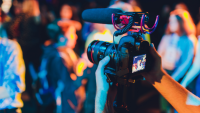
Search is increasingly visual. Speaker clips, venue walkthroughs, product demonstrations, show-floor footage and session extracts can all help someone understand an event faster than another block of copy.
Give important images descriptive alt text, use useful captions where appropriate and place video alongside relevant supporting copy. Do not bury your strongest visual proof on social media while the website remains static.
For event marketers, this is particularly valuable because the event itself produces a constant stream of original visual material. Use content captured at the event to boost your SEO strategy year-round.
7. Keep the technical SEO basics in good shape
GEO cannot rescue a site that search engines struggle to crawl, render or understand.
Make sure important pages are indexable, internal links work, canonicalisation is sensible, mobile pages are usable and the site performs well. Google’s page experience guidance continues to recommend good Core Web Vitals as part of an overall strong user experience.
Technical SEO is not the exciting part of an AI search strategy, but it is the foundation that allows the content to compete.
8. Treat speaker and exhibitor information as search assets
Speaker and exhibitor pages can do more than fill out the event website.
Give each important profile enough context to explain who the person or organisation is, what they are contributing and why it matters to your audience. Link speakers to their sessions and relevant themes. Link exhibitors to the categories or solutions they represent where appropriate.
That creates stronger connections between the people, companies and subjects associated with your event.
9. Update time-sensitive information quickly
Events change. Speakers drop out. Timings move. Ticket phases close. Venues occasionally change.
Out-of-date information creates a poor user experience and makes your site a less dependable source. Build ownership into the process so that important event facts are updated across relevant pages and structured data together.
Accuracy matters more than adding another 500 words to a page.
10. Measure GEO as part of organic performance, not in isolation
Do not reduce GEO success to whether somebody can screenshot your brand inside an AI Overview.
Google reports AI Overview and AI Mode activity through Search Console, and its reporting continues to evolve. Look at visibility alongside engaged organic visits, journeys into key event pages and, most importantly, registrations or qualified exhibitor enquiries.
For MCM, SEO success ultimately needs to connect to registrations, not rankings for their own sake.
Event GEO checklist

Before your next event campaign ramps up, sense-check whether:
- the event’s name, dates, location and audience are clear on-page
- agenda and session pages explain outcomes rather than relying on clever titles
- speaker and exhibitor information contains useful context
- original event data, expert insight and video are being reused on the website
- key pages link together logically
- relevant structured data matches the visible content
- important pages are crawlable, indexable and mobile-friendly
- old dates, prices and programme information are removed or updated
- organic performance is connected back to registrations and exhibitor leads
What should you avoid when optimising for AI search?
Avoid treating GEO as a reason to manufacture more content.
Publishing dozens of thin question pages, repeating the same answer with slightly different wording or adding schema that does not match the page will not make the website more useful. Google’s spam policies apply to generative AI responses in Search as well as traditional results.
You also do not need to chase every new acronym or technical trick. Google clarified in June 2026 that an llms.txt file is not needed for Google Search and does not improve or harm visibility or rankings there.
Put that time into the information your audience actually needs.
GEO and SEO should work together
For event marketers, the most useful way to think about GEO is not “SEO is dead”. It is that organic discovery now has more surfaces.
A strong event website still needs the SEO fundamentals. GEO raises the bar on clarity, originality and usefulness, then asks you to package the information so modern search experiences can understand it.
Get the basics right and your website can do more than rank for your event name. It can answer the questions people ask while they are deciding which events deserve their time, travel and budget.
And that is the commercial point. Better organic visibility only matters if it helps more of the right people discover your event, build confidence and ultimately register or enquire.
Want to sense-check how discoverable your event is across traditional and AI search? Talk to our SEO team.